

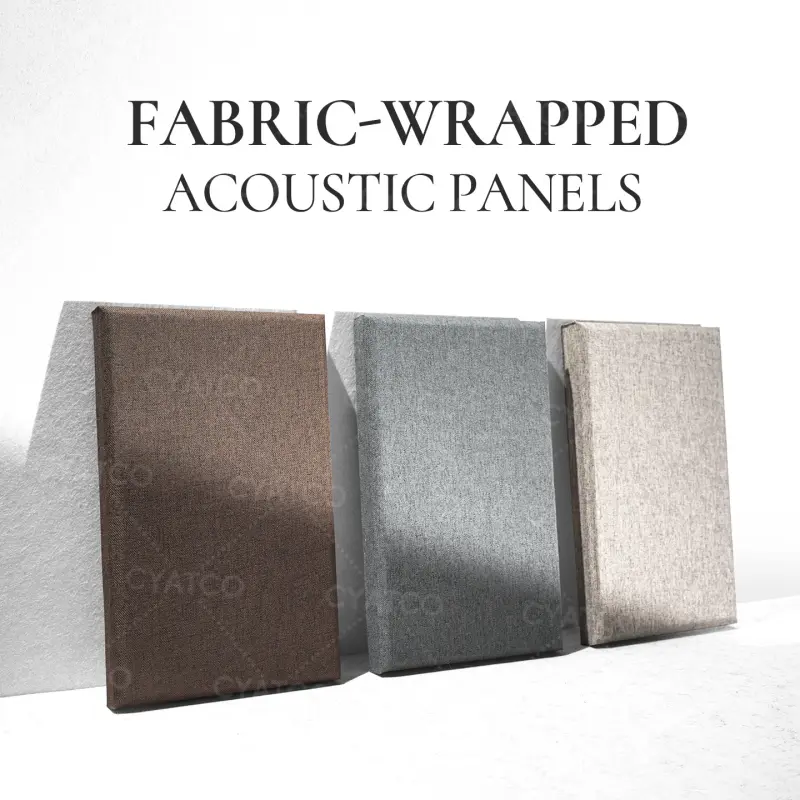
Whether you are designing an auditorium, upgrading a conference room, or treating a recording studio, the walls you choose decide how the room sounds. Fabric acoustic wall panels have become one of the most popular acoustic solutions for a simple reason: they absorb sound instead of reflecting it, they look like premium interior design, and they can be tailored to almost any architectural style.
This guide covers how fabric acoustic panels work, what their NRC rating really means, which thickness fits which space, and how to maintain them for years of reliable service.
What Are Fabric Acoustic Wall Panels?
A fabric acoustic wall panel is a sound-absorbing board made with a high-density acoustic core — in CYATCO’s case, high-grade glass fiber — wrapped in a decorative acoustic fabric. The core has a porous structure that absorbs and disperses sound waves as they strike the surface. Instead of bouncing off the wall to create reflections, echoes, and standing waves, the sound energy is absorbed and dissipated. The result is a quieter room with clearer speech and a more comfortable listening environment.
The acoustic fabric covering is chosen with two jobs in mind: it lets sound pass through to the absorbing core, and it gives the panel a rich, tactile finish that suits contemporary interiors.
What Does an NRC of 0.90 Really Mean?
NRC — Noise Reduction Coefficient — is the industry’s standard measure of sound absorption. It runs on a scale of 0 to 1: an NRC of 0 means the surface reflects all sound that hits it, while a rating of 1.0 means it absorbs everything. NRC is averaged across the mid-frequency range that matters most for speech and everyday noise, roughly 250 to 2000 Hz.
CYATCO fabric acoustic wall panels are rated at NRC ≥ 0.90, meaning they absorb at least 90% of the sound energy that strikes them across speech frequencies. In practical terms, that translates into noticeably less echo in meeting rooms, clearer speech in lecture halls, and better definition in studios and home theaters.
25mm, 50mm or 100mm — How to Choose the Right Thickness
Panel thickness is the single biggest factor in acoustic performance, especially at lower frequencies. Here is a practical starting point:
| Thickness | Best suited for | What it delivers |
|---|---|---|
| 25 mm | Offices, meeting rooms, home theaters, hotel lobbies | Solid mid-to-high frequency control with the best coverage-to-cost ratio |
| 50 mm | Auditoriums, classrooms, lecture halls, studios | The professional default: deeper absorption and a more balanced frequency response |
| 100 mm | Gyms, theaters, music rooms, critical listening spaces | Maximum absorption, particularly at low frequencies |
| Custom | Any project with specific acoustic targets | Thickness and core density produced to your design |
All thickness options share the same core performance — NRC ≥ 0.90 — with core density available from 48 to 120 kg/m³ for higher-performance builds.
For product brochures and detailed specifications, please contact: chuangya168@gmail.com
Standard Sizes, Edge Designs and Colors
CYATCO fabric acoustic wall panels are manufactured in standard sizes of 600×600 mm, 600×1200 mm and 600×2400 mm, so they align with common wall grids and require minimal on-site cutting. Two edge designs are available: right-angle for a crisp, continuous surface, and beveled (cut-corner) for a softer, more dimensional look.
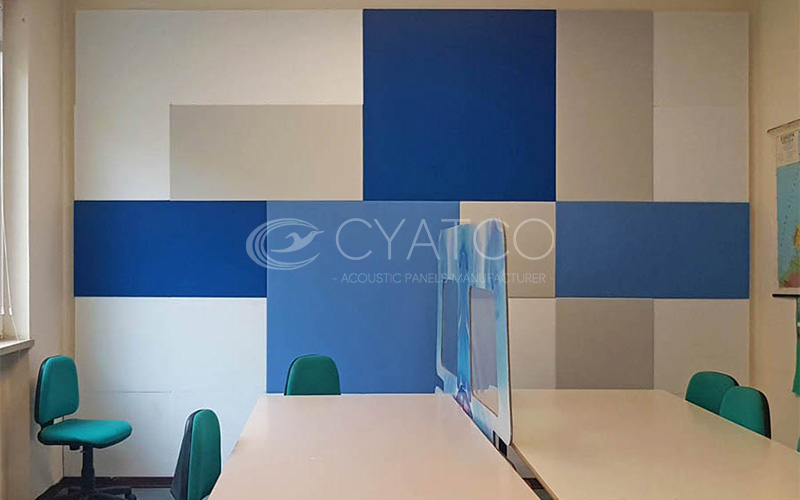
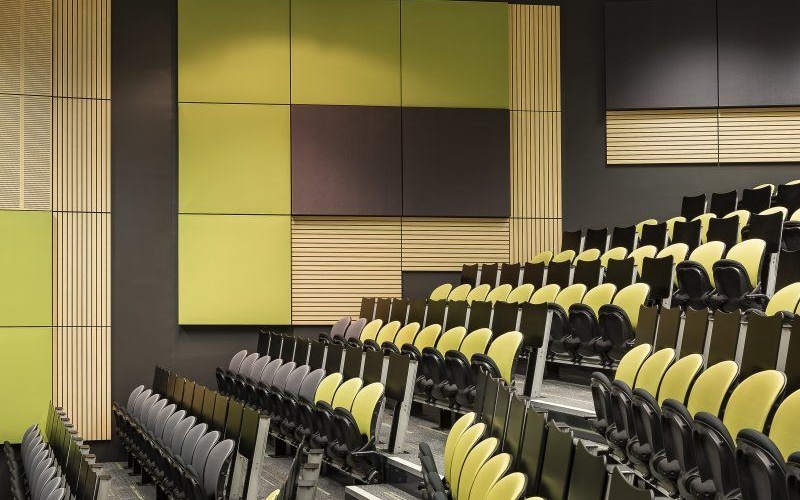
On the design side, the range covers more than 50 fabric colors and several textures — smooth, fine, rough, or patterned — so the panels can either disappear into a neutral scheme or become the feature wall of the room. Whether the space is modern minimalist or retro in character, there is a combination that fits, and custom colors and sizes are available for larger projects.
600×600 mm Fabric Wrapped Acoustic Panel
600×2400 mm Fabric Wrapped Acoustic Panel
Browse more >> fabric acoustic panels
Fabric Acoustic Panels for Every Space
Because they combine acoustic performance with visual flexibility, fabric acoustic wall panels work in an unusually wide range of buildings. Here is how they perform in the spaces they are most often specified for.
Auditoriums and Theaters
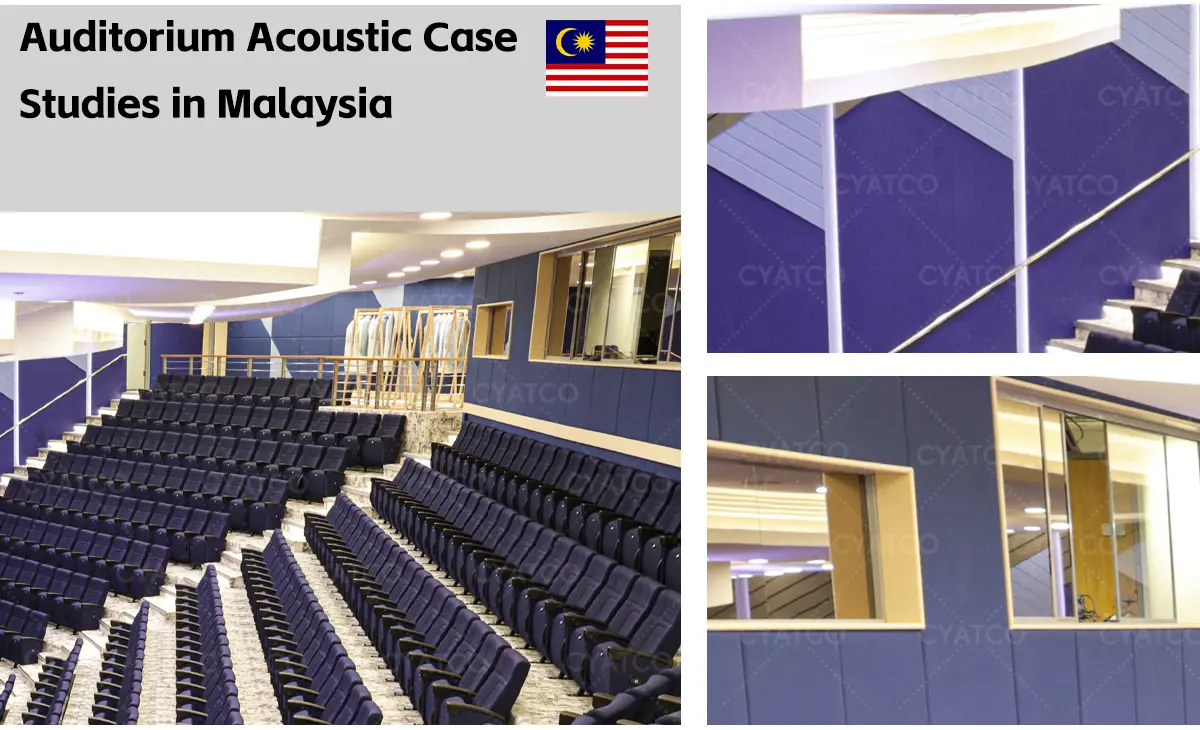
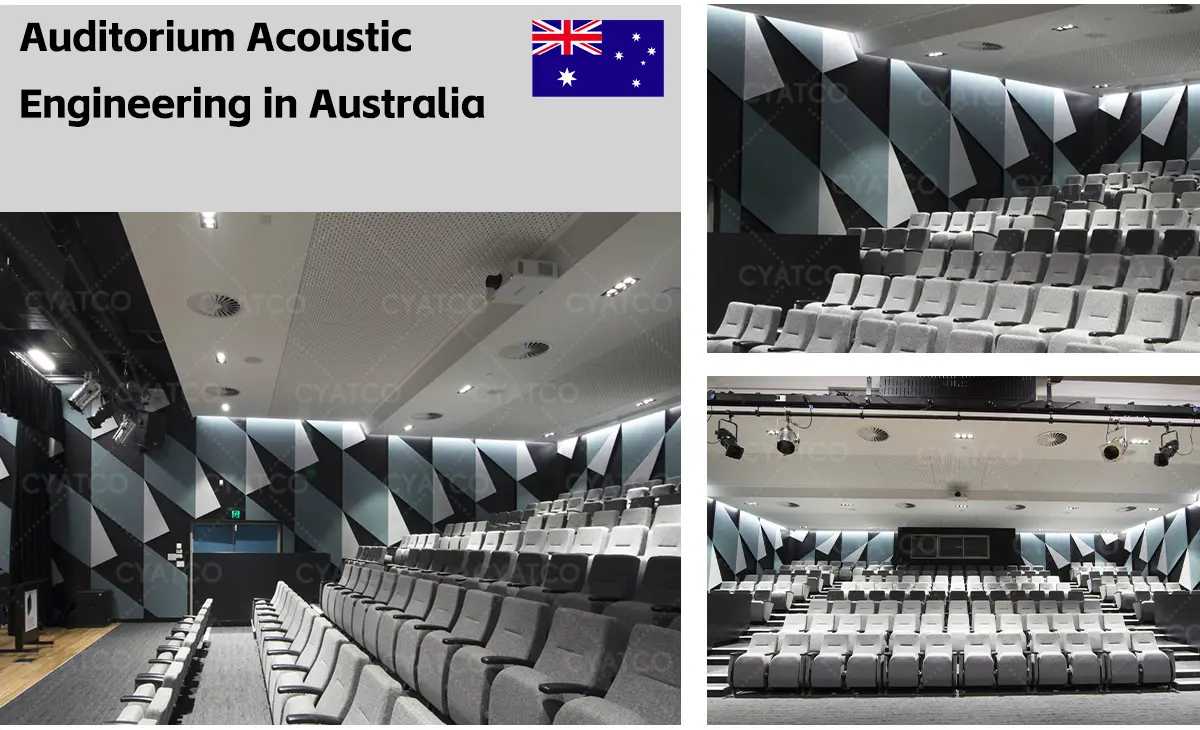
Auditoriums live or die by speech intelligibility. Long reverberation times smear the presenter’s voice, and hard surfaces turn applause into noise. Colorful fabric acoustic panels on the walls cut reverberation while giving the hall a strong visual identity.
For acoustic design & engineering quotations, please contact: chuangya168@gmail.com
Schools, Lecture Halls and Classrooms
In teaching spaces, students need to hear every word without straining. Fabric acoustic wall panels reduce background noise and echo in lecture halls and classrooms, improving speech clarity for students at the back of the room. The soft, impact-tolerant surface is also a practical advantage in schools, where walls take daily bumps from traffic.
Gymnasiums and Sports Facilities
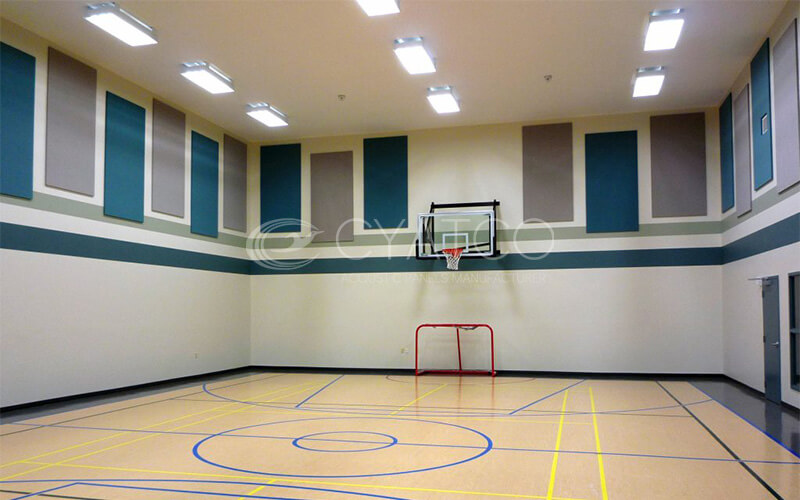
Gyms and sports halls are among the loudest indoor environments, and they punish their walls. Fabric acoustic panels handle both problems: they absorb the roar of games and training sessions, and their rigid construction withstands the knocks of everyday sports use. Bold color combinations also help wayfinding and give each court or training zone its own identity.

For acoustic design & engineering quotations, please contact: chuangya168@gmail.com
Offices, Meeting Rooms and Hotel Lobbies
Open-plan offices and meeting rooms suffer from noise leakage, which hurts concentration and makes video calls hard to understand. Fabric panels reduce unwanted reflections and background noise, making conversations clearer. In hotel lobbies and restaurants, they add acoustic comfort and a layer of warmth and texture that bare drywall or concrete cannot match.
Built to Withstand Daily Impact
Fabric acoustic wall panels are specified for busy public buildings, so they are built to be handled, not just admired. The wooden backboard keeps every panel rigid and dimensionally stable. The fabric surface is selected to resist scuffs and abrasion in high-traffic corridors and halls.
Maintenance is straightforward: wipe the surface with a dry or slightly damp cloth as needed. If a panel is ever damaged, it can be replaced individually — there is no need to strip panels from the rest of the wall. This makes fabric acoustic panels a low-cost, low-effort choice over the full life of a building.
Fire Safety and Environmental Standards
Safety is non-negotiable in public spaces, and every CYATCO fabric acoustic panel is certified fire-resistant to the national fire-protection standards of major markets. The panels carry SGS, CE, and RoHS certifications, covering fire safety, responsible sourcing, European compliance, and restricted hazardous substances.
The glass fiber core and fabric cover are non-toxic and meet environmental requirements, which matters in schools, hospitals, and other sensitive settings.
FAQ
Do fabric acoustic wall panels actually reduce noise?
Yes. They absorb sound energy rather than reflecting it, cutting echo, reverberation, and background noise inside a room. With an NRC of 0.90 or higher, CYATCO panels absorb at least 90% of the sound that strikes them across speech frequencies.
What does an NRC rating of 0.90 mean?
NRC (Noise Reduction Coefficient) measures sound absorption on a 0–1 scale, averaged over 250–2000 Hz. A rating of 0.90 means the panel absorbs at least 90% of incident sound energy across that range — noticeably quieter, clearer spaces in practice.
Are fabric acoustic wall panels fire-resistant?
Yes. CYATCO panels meet the national fire-protection standards of major markets and carry SGS, CE, and RoHS certifications.
Can I customize the color, size, and edge of the panels?
Yes. Panels come in 50+ fabric colors with smooth, fine, rough, or patterned textures, in right-angle or beveled edges. Standard sizes are 600×600 mm, 600×1200 mm, and 600×2400 mm; custom sizes and thicknesses are available on request.
How do I clean and maintain fabric acoustic panels?
Wipe the surface with a dry or slightly damp cloth as needed. Damaged panels can be replaced individually without disturbing adjacent panels, keeping long-term maintenance simple.
What is the minimum order quantity?
Factory EXW pricing applies to orders of 100 m² and above. Contact us for a quotation based on your size, thickness, color, and quantity.
Get a Free Quote for Your Project
Whether you need 100 m² or 10,000 m², standard sizes or fully custom colors and dimensions, we can help you specify the right panel — and back it with factory-direct pricing and full-project support from material selection to installation.MOQ: 100SQM; mixed items allowed. For product quotations, please contact:chuangya168@gmail.com