

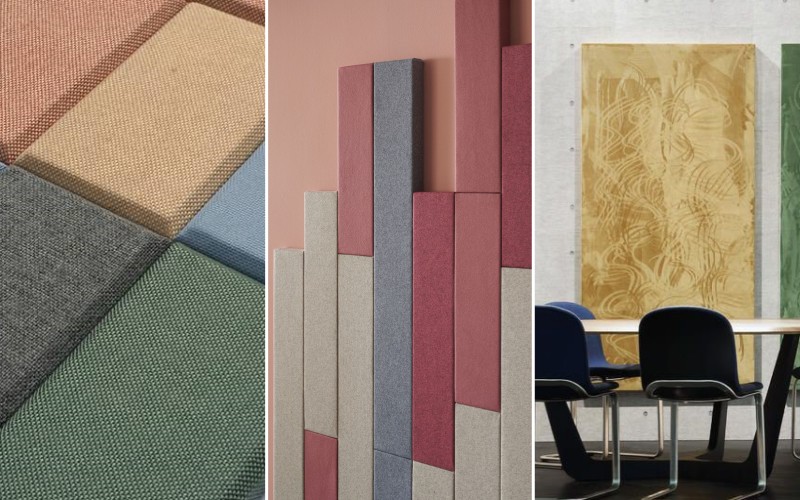
What fabrics are commonly used for fabric-wrapped acoustic panels?
1. Fabric and its impact on sound absorption performance
The fabric covering on an acoustic panel serves more than just a decorative purpose; it acts as a barrier that sound waves must pass through before reaching the internal sound-absorbing material. The material of the fabric directly determines whether sound waves can effectively penetrate the panel and be absorbed.
A suitable fabric allows sound waves to pass through smoothly and enter the porous sound-absorbing core (such as fiberglass or polyester fiber). Inside, the sound energy is dissipated as heat through friction within the fiber interstices, thereby achieving efficient sound absorption. Conversely, if an unsuitable fabric is chosen, sound waves will be reflected, significantly compromising the sound-absorbing performance.
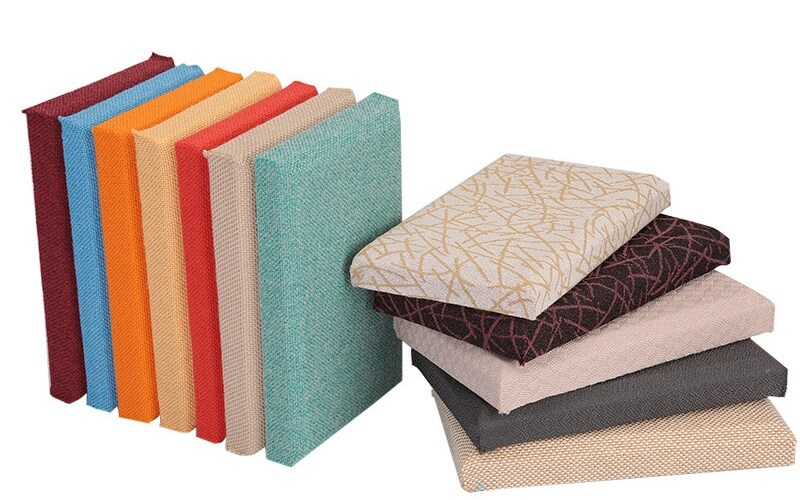
2. Detailed Overview of Common Fabric Types
Common fabric choices for acoustic wall panels include flame-retardant acoustic fabric, linen, leather, and suede-like fabrics.
- Flame-retardant acoustic fabric: Highly breathable with minimal resistance to sound wave penetration, this fabric offers excellent sound absorption in the mid-to-high frequency ranges, making it the top choice for professional acoustic applications. It meets Class B1 flame-retardant standards (with some base materials achieving Class A non-combustibility), ensuring safety. It is suitable for spaces requiring high acoustic performance, such as conference rooms, concert halls, lecture halls, recording studios, and home theaters.
- Linen: Offers good breathability, facilitating sound wave penetration. It features a distinct, appealing texture and a natural look that aligns with current minimalist and natural interior design trends. It is also generally durable and easy to maintain.
- Leather: Has poor breathability; while micro-perforation techniques can be used to improve airflow, this increases manufacturing complexity and cost. Visually luxurious and sophisticated with a premium feel, it is easy to clean via simple wiping. It is best suited for spaces where decorative impact is prioritized over strict acoustic performance, such as luxury hotel corridors, high-end bars, and private clubs.
- Suede-like fabrics: Offer a visually premium and elegant appearance with a soft touch, creating a warm atmosphere. Due to poor sound transparency, they are not recommended for large-scale sound-absorbing panel applications. These materials tend to accumulate dust relatively easily, requiring more meticulous cleaning and maintenance.
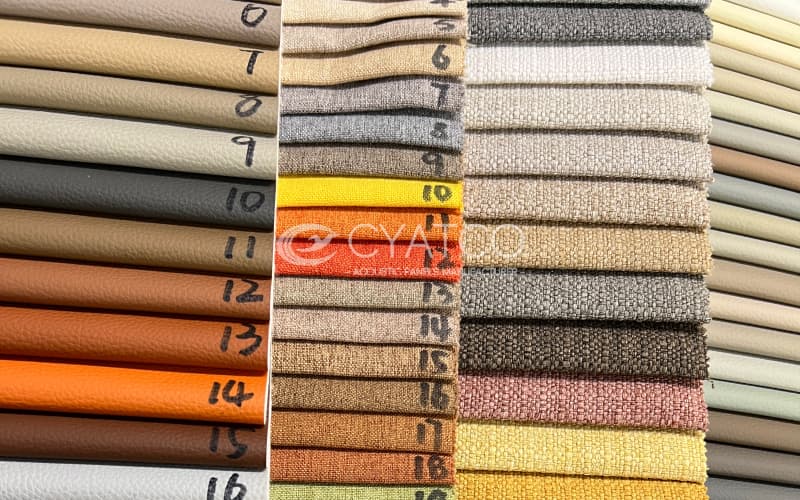
3. Key Considerations for Fabric Selection
3.1 Acoustic Performance: Breathability is the Core Metric
Prioritize specialized sound-absorbing fabrics or flame-retardant textiles. You can perform a simple test: blow air onto the fabric; if you feel a distinct airflow passing through, it indicates good breathability and basic acoustic transparency. If you choose leather for visual appeal, ensure the product has undergone professional micro-perforation treatment for acoustic performance.
3.2 Safety and Environmental Standards
For commercial or public areas, fabrics must meet the national B1 fire-retardant standard; this is a fundamental safety requirement for both public spaces and homes. Additionally, consider the emission levels of harmful substances like formaldehyde; E1 is the minimum standard for indoor use, while E0 offers superior environmental safety.
3.3 Wear and Scratch Resistance
For public spaces or areas subject to frequent contact, select fabrics with high wear resistance and stain-resistant finishes to facilitate daily cleaning.
3.4 Aesthetics and Texture
Fabric sound-absorbing panels offer a wide range of colors and textures—from cozy linen weaves to luxurious velvets—that can be customized to match your interior design style (or even custom-made from samples). When selecting, aim to perfectly blend the fabric with your space’s aesthetic while ensuring acoustic and safety requirements are met.
4. Summary
Selecting the fabric for upholstered acoustic panels involves balancing acoustics, safety, aesthetics, and durability. Clarify your primary needs when purchasing: for professional acoustic spaces, prioritize breathability and fire-retardant ratings; if aesthetics are the priority, opt for acoustically optimized leather or high-quality textiles.